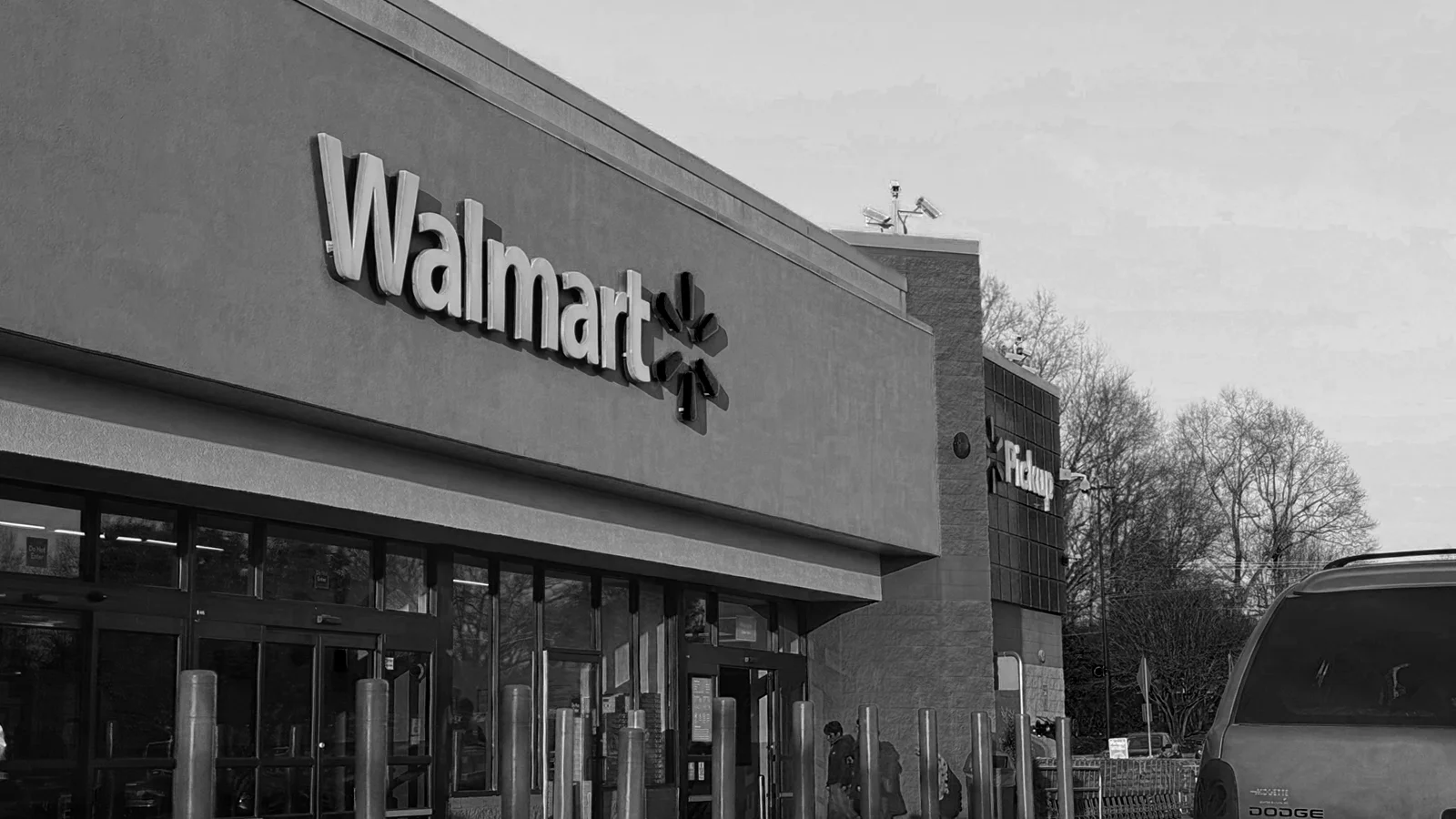
Walmart just told the world that its own packaging has been lying about its own products for over a decade. Not in those words, of course. But when a company announces it will redesign 10,000 products because customers "didn't feel proud to display it in their home," the subtext is hard to miss. The brand was working against the product. And that might be the most expensive branding mistake a company can make.
On April 15, Walmart unveiled the biggest private brand overhaul in its history: a complete visual redesign of its Great Value line, covering roughly 10,000 SKUs across every aisle. The rollout starts with snacks in May 2026 and will take 18 to 24 months. This is not a logo tweak. This is a company worth $600 billion admitting that its packaging strategy was actively costing it customers. The lessons here extend far beyond retail, and far beyond Walmart.
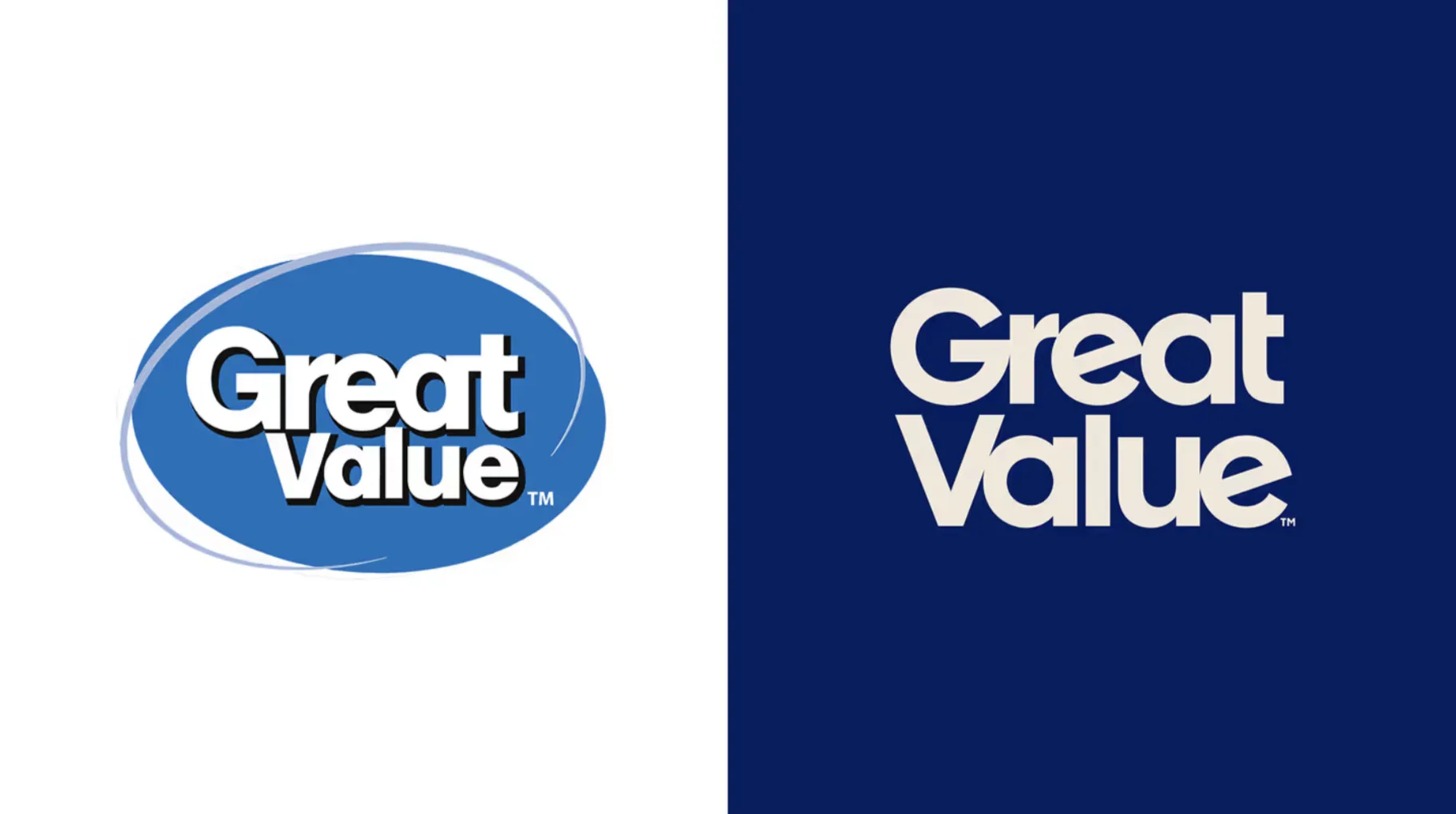
What exactly is Walmart changing, and why now?
On April 15, Walmart announced it would redesign roughly 10,000 Great Value products in the biggest private brand refresh in the company's history. The rollout starts with snacks in May 2026 and will take 18 to 24 months to cover the full range. The old packaging worked. It communicated low price. The problem is that low price was the only thing it communicated.
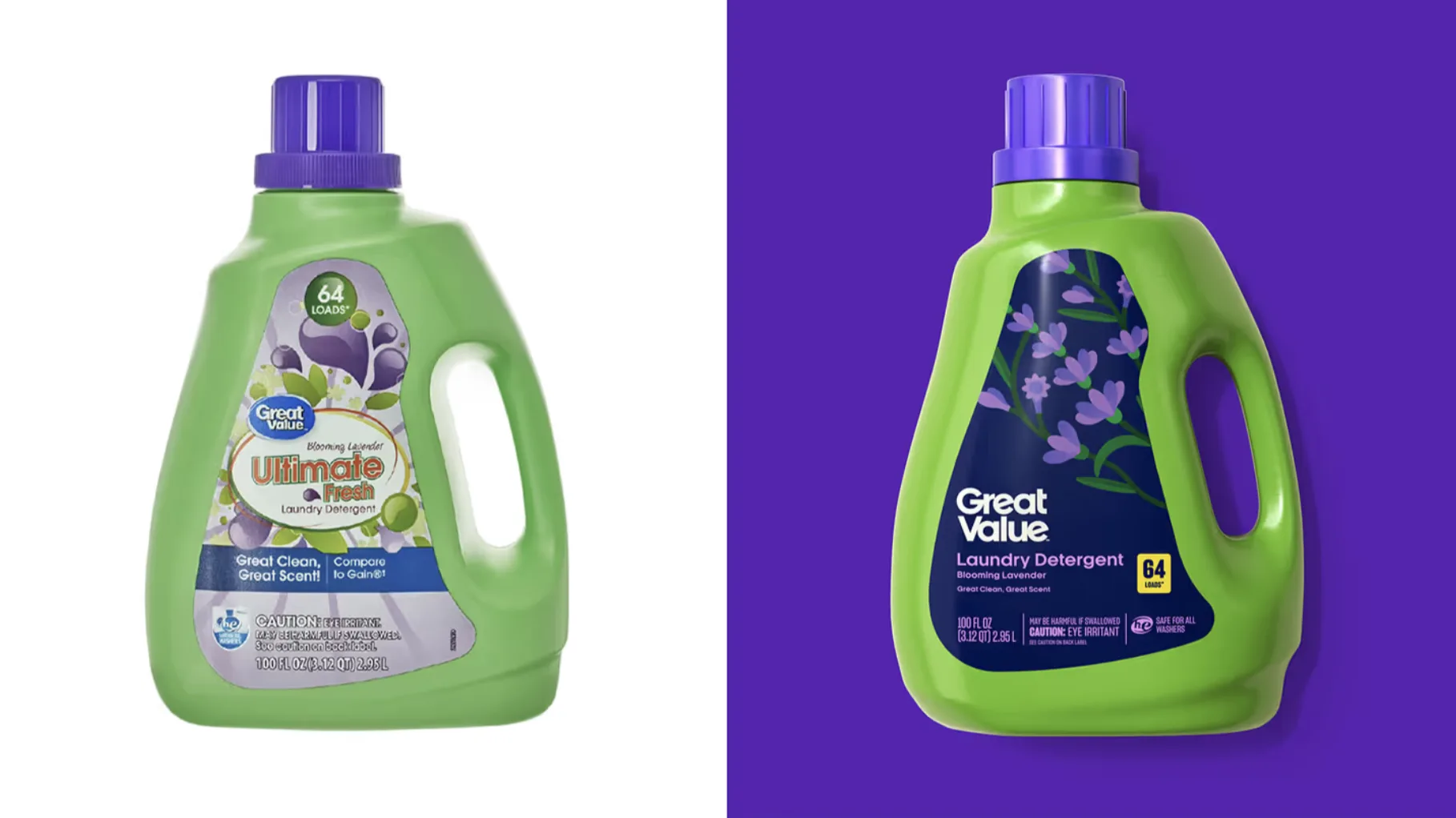
Walmart's own customer research uncovered a telling insight: shoppers liked the quality. They liked the price. But they "didn't feel proud to display it in their home." Think about what that sentence contains. The product was winning on every rational metric and losing on the emotional one. The packaging was doing the opposite of what packaging is supposed to do. Instead of elevating the product, it was apologizing for it.
The new design direction moves toward cleaner typography, bolder food photography, and what Fast Company described as going "full shoppy shop," borrowing visual codes from premium grocery and DTC brands. More white space. Less visual noise. Standardized nutritional call-out boxes designed to be readable by both humans and algorithms. The goal, according to Walmart's creative team, is to make Great Value feel like a brand you choose, not a brand you settle for.
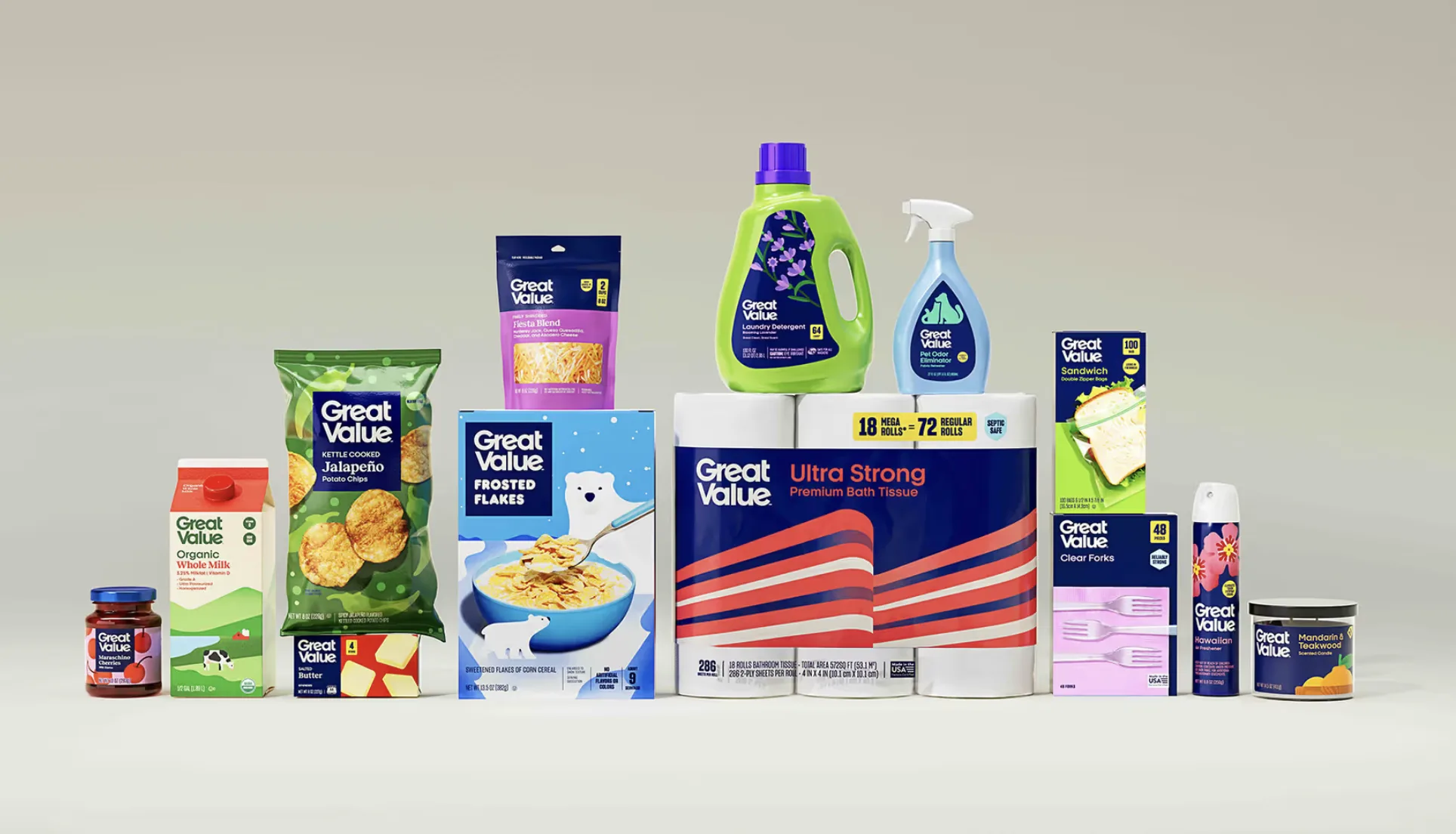
Why does packaging perception lag behind product quality?
This is the most common branding failure I see, across categories and price points. A company improves its product, sometimes dramatically, but never updates the container that delivers it. The result is a trust gap: the experience exceeds the expectation set by the shelf presence, which sounds like a good problem to have until you realize that most people never try the product in the first place because the packaging told them not to bother.
The mechanism is simple. Packaging is a promise. It tells the customer what to expect before the product can speak for itself. When a shopper sees a Great Value can of tomatoes with outdated typography and a clip-art-quality food photograph, their brain categorizes it instantly: cheap, functional, last resort. The actual tomatoes inside might be identical to (or better than) the premium brand one shelf over. It does not matter. The decision was made in under two seconds, and the packaging made it.
A study published on April 15 by Info-Tech Research Group reinforces the broader pattern. Their research found that most organizations invest heavily in marketing execution (campaigns, ads, social content) without first building a structured brand foundation. The result is inconsistent messaging, reduced visibility, and missed growth opportunities. Walmart's Great Value problem is a textbook example: millions spent on shelf placement and promotions, but the packaging itself was sabotaging the message.
We explored a version of this tension in our analysis of why adaptive brand identities are replacing static systems. The principle applies here too: a brand that cannot evolve its visual expression to match its actual quality will eventually be outgrown by its own products.
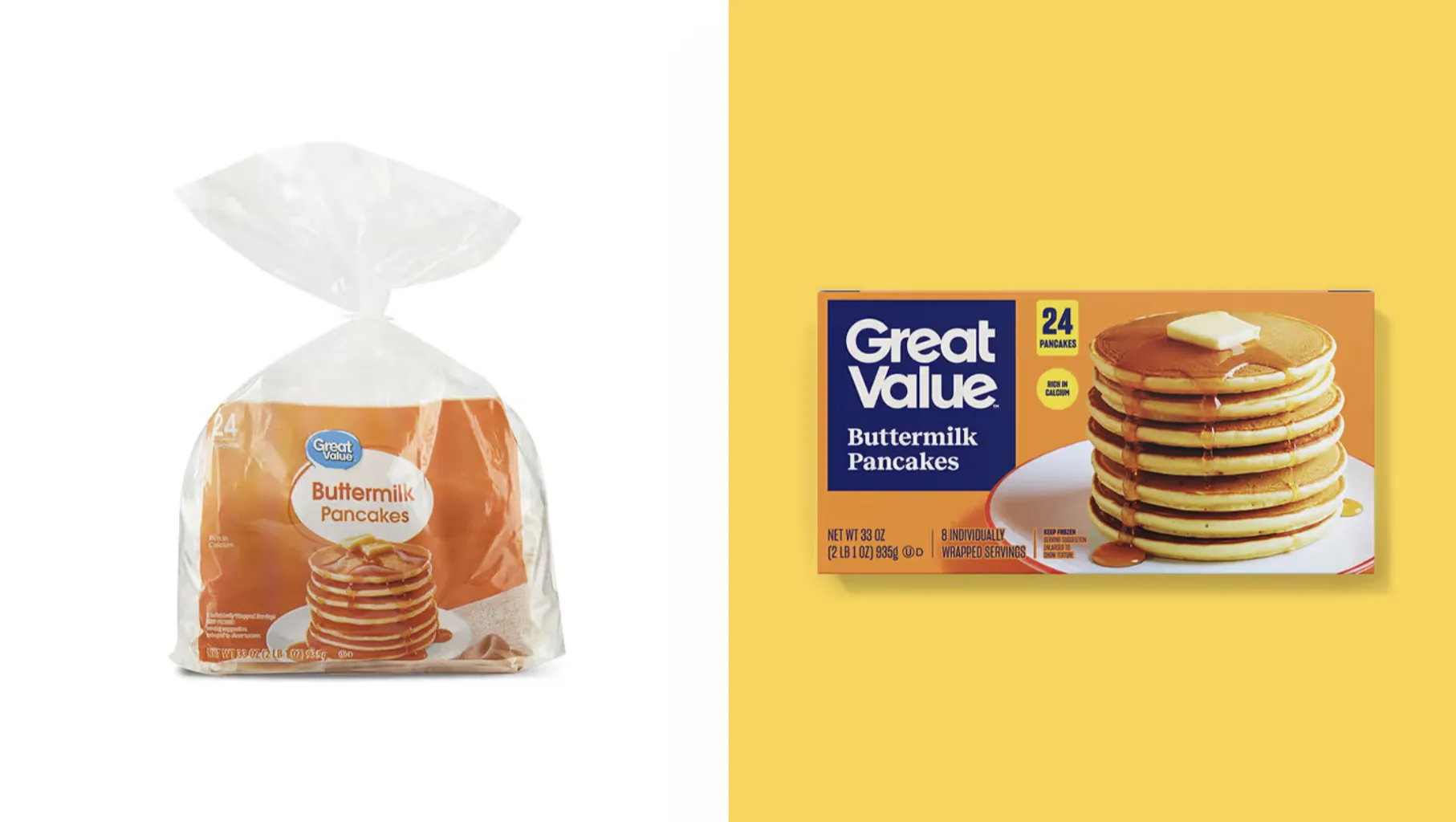
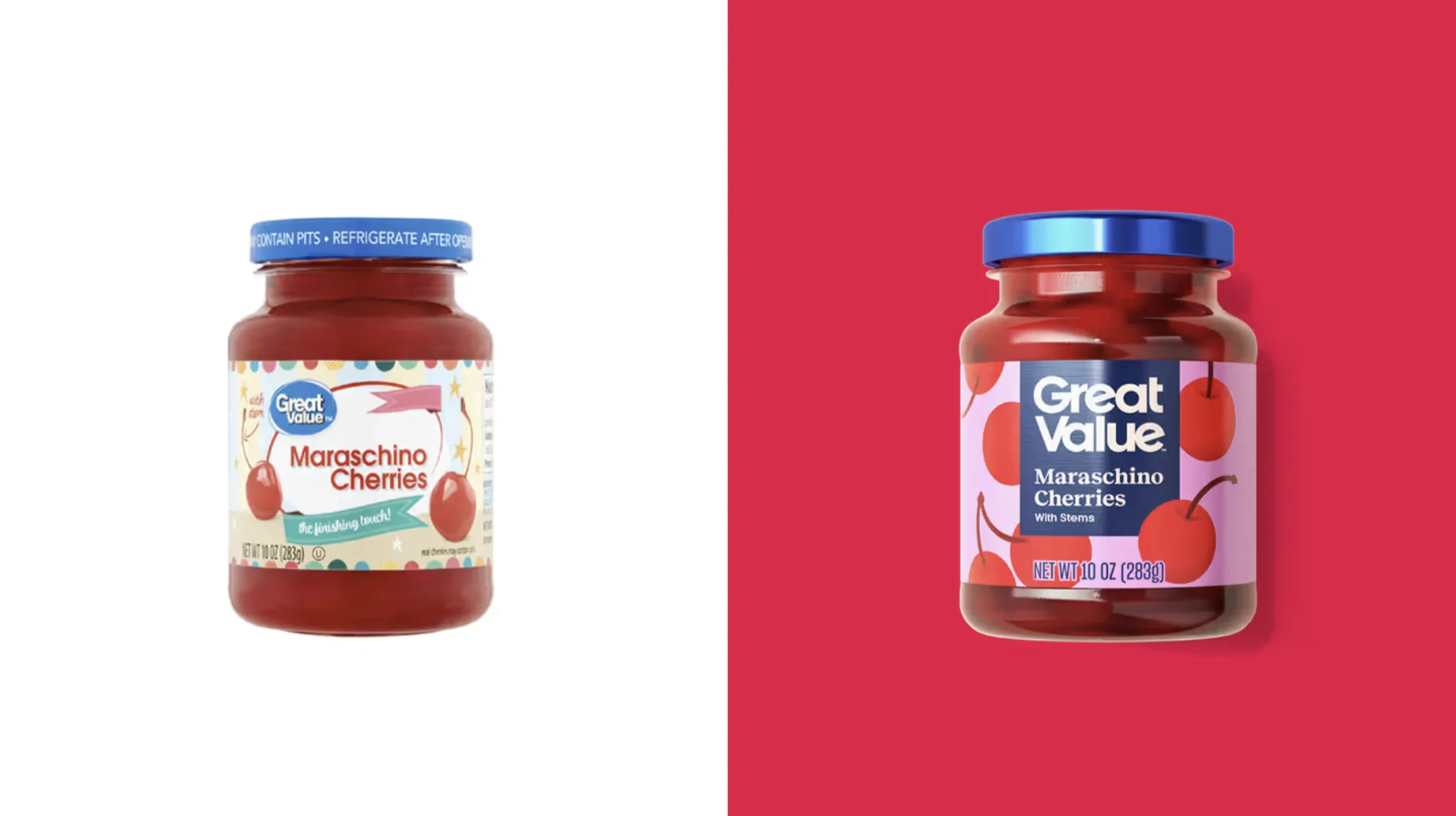
Is private label the new brand playbook?
Private label is no longer a fallback. It is a strategy. US private label sales hit $283 billion in 2025, growing at 3.3 percent while many national brands stayed flat or declined. According to a Food Navigator report published on April 3, 86 percent of US shoppers have tried private label products, and 64 percent now perceive their quality as equal to or better than name brands.
Those numbers represent a structural shift, not a trend. For decades, private label occupied a specific psychological slot: the no-name alternative you bought when money was tight. That slot is disappearing. Trader Joe's built an entire empire on private label as the primary offer. Costco's Kirkland Signature is one of the most trusted brands in America. Amazon Basics expanded the model into electronics and home goods. What these brands share is a refusal to treat private label as inherently inferior.
Walmart is late to this realization, but the scale of its response is telling. You do not redesign 10,000 products over 18 months because you want a prettier shelf. You do it because the data shows that packaging is the single biggest barrier between your product and a higher-income customer segment. Walmart is explicitly targeting households earning six figures, customers who currently drive past Walmart to shop at stores with better-looking brands. The product was never the problem. The perception was.
This connects to a broader principle that applies well beyond grocery. If your brand's visual system was designed for a customer you have outgrown, every marketing dollar you spend is pushing against the friction your own packaging creates. We have seen this same pattern in digital contexts, where a startup's early-stage branding becomes a liability once the product matures, a dynamic we discussed in our piece on why "imperfect by design" only works when the imperfection is intentional.
What does the AI-ready packaging detail reveal?
Buried in the Great Value redesign details is a feature that received almost no press attention but signals where retail packaging is heading. The new design includes standardized nutritional call-out boxes specifically formatted for AI-assisted shoppers and gig delivery workers.
Think about what that means. Walmart is designing packaging not just for the person holding the product, but for the algorithm recommending it and the gig worker picking it off the shelf. The nutritional call-out boxes are structured so that a delivery app's image recognition can parse the data quickly, so that an AI shopping assistant can compare products across categories, so that a Spark driver filling an order can identify the right item in seconds rather than minutes.
This is packaging design for three audiences simultaneously: the end consumer, the intermediary (human or robotic), and the machine learning model that increasingly shapes what gets recommended. Most brands still design for one audience. Walmart is designing for the ecosystem.
The implication for brand strategy work is clear. Packaging briefs in 2026 need to account for how a product appears not just on a shelf and not just on a screen, but inside an algorithm's decision tree. The brands that build for all three contexts will have a compounding advantage as AI-assisted shopping scales from early adoption to default behavior. The brands that ignore it will find their products literally invisible to the systems that increasingly decide what people buy.
Can a rebrand actually backfire at this scale?
Yes, and the risk is not hypothetical. The biggest danger in a 10,000-SKU rebrand is what I call coherence drift. You design a beautiful system for the first 200 products. Then the eighth packaging vendor in the chain gets a slightly different brief. Then the snack team interprets the guidelines differently from the dairy team. By SKU 5,000, the brand looks like three different brands wearing the same logo.
Tropicana's 2009 redesign is the cautionary tale that still haunts every packaging conversation. They spent $35 million on a rebrand that confused customers so badly that sales dropped 20 percent in two months. They reversed the design. The lesson was not that rebrands are dangerous. It was that rebrands that abandon recognition cues without building new ones are dangerous. Walmart's approach, keeping the Great Value name and color architecture while upgrading the typography and photography, suggests they learned from Tropicana. But 10,000 SKUs is a different kind of challenge. Tropicana had a handful of products. Walmart has an entire grocery store.
The other risk is expectation inflation. When you make the packaging look premium, you raise the bar for what the product inside needs to deliver. If the new Great Value chips bag looks like it belongs next to Kettle Brand, the chips inside had better taste like they belong there too. Packaging that overpromises is worse than packaging that underpromises, because the customer feels deceived rather than pleasantly surprised. Walmart's customer data suggests the quality is already there. But quality is not uniform across 10,000 products, and the weakest items in the range will be exposed by packaging that claims otherwise.
The real lesson for every brand under $10 million
You do not need Walmart's budget to apply the principle behind this rebrand. The principle is simple: if your product is better than your packaging suggests, you are leaving money and trust on the table every single day. Most founders I work with underestimate how much their visual presentation filters out potential customers before those customers ever experience the product.
The Info-Tech Research Group study from April 15 quantifies what many of us in branding have observed for years: organizations that invest in marketing execution without a structured brand foundation see diminishing returns. The spend increases. The results plateau. The diagnosis is almost always the same. The marketing is fine. The brand underneath it is not doing its job.
Here is the exercise I would suggest for any founder reading this. Pull up your product (physical or digital) next to your three closest competitors. Show all four to someone who has never seen any of them. Ask one question: based purely on what you see, which one costs the most? If the answer is not yours, and your product's quality justifies a higher price, you have a packaging problem. Not a marketing problem. Not a product problem. A packaging problem.
Walmart is spending 18 months and hundreds of millions to fix this gap across 10,000 products. A startup or mid-sized brand can fix it in weeks with a focused identity project. The economics are the same at every scale: every day your packaging undersells your product is a day you are subsidizing your competitors' perceived superiority with your own customer's first impression.
The brands that will win the next five years are not the ones with the biggest ad budgets. They are the ones whose packaging, digital presence, and brand systems tell the truth about what is inside. If your brand identity needs that kind of honest reassessment, that is the work we do at pipopstudio, and the first conversation is always free.
Walmart just admitted that 10,000 of its products deserved better packaging than they had. The question for every brand owner is simpler: does yours?
Sources
- Fast Company: Walmart's Great Value goes "full shoppy shop" with its biggest redesign ever (April 15, 2026)
- Walmart Corporate: Great Value gets a fresh look (April 15, 2026)
- Food Navigator: Private label trends 2026: innovation, pricing, trust (April 3, 2026)
- Info-Tech Research Group: Most organizations invest in marketing without clear brand foundation (April 15, 2026)
- PLMA: US private label sales reach $283 billion in 2025 (April 2026)