The smoothest brand in the room is now the most forgettable
I scrolled through 40 brand identities last week, submissions for a design award shortlist in Paris. Every single one looked like it was generated in the same afternoon, by the same tool, with the same prompt. Flawless gradients. Spotless mockups. Typefaces so safe they could have been selected by a committee of accountants. Not one of them made me stop scrolling.
That's the problem with perfection in 2026: it's free. Any founder with a Midjourney subscription and 20 minutes can produce a brand that looks technically polished. And when polish costs nothing, it signals nothing. The interesting question isn't "how do we make this look better?" anymore. It's "how do we make this feel like a human made it, on purpose, with a point of view?"
Canva's 2026 Design Trends Report, drawn from the behaviour of 260 million users and a survey of 1,000 creators, puts a name on the shift: "Imperfect by Design." Not imperfect by accident. Not amateur. Imperfect as strategy, a conscious choice to reclaim the texture, warmth, and human presence that generative AI has systematically erased.
What does the data actually say?
The numbers from Canva's December 2025 report aren't subtle:
- +90% in DIY-inspired searches, raw, personal, scrapbook-style design. People are deliberately making things look handmade.
- +85% in zine and Substack-inspired layouts, editorial storytelling over corporate template. The grid is loosening.
- +220% in searches for "liminal" and "uncanny", nearly a quarter of surveyed creators predicted this would be the defining aesthetic of 2026.
- +54% in searches for "clean layout," "serif," and "simple branding", which sounds contradictory until you realise radical simplicity is itself a form of rebellion against the AI-maximalist noise.
These aren't niche signals from a design subculture on Are.na. This is 260 million people shifting their creative behaviour simultaneously. When Creative Bloq called the report "the first good news in design in years," they weren't being hyperbolic. The pendulum is swinging, and it's swinging hard.
What makes this different from the usual annual trend reports is the why. This isn't driven by fashion or boredom. It's driven by a material change in the tools. When AI made perfection free, imperfection became the scarce resource. And scarcity, in branding as in economics, is where value concentrates.
Adobe's own Creative Trends data reinforces the picture: searches for hand-drawn and imperfect design elements rose 30% year-over-year. We're seeing the same signal from different platforms, different communities, different geographies. This isn't a trend bubble. It's a structural correction.
Five visual shifts that define the movement
1. Tactile textures over smooth renders
Grain, paper fibres, woven materials, rough edges. Designers are rejecting the CGI-smooth aesthetic in favour of surfaces you can almost feel through the screen. Creative Bloq calls it "tactile rebellion": a conscious choice to make digital work feel physical. Searches for realistic textures are up 30% on Canva alone. It's the design equivalent of choosing a vinyl record over a Spotify stream, same music, completely different relationship with the object.
2. Typography as protagonist
Type in 2026 isn't supporting the content. It IS the content. Oversized sans-serifs, bubbly letterforms, wavy distortions, handwritten scripts that look like they were scrawled on a napkin during a midnight brainstorm. Fontfabric's 2026 report calls this the shift from "type as text" to "type as experience." Kittl's analysis of the naive design trend goes further: wonky expressive serifs are specifically replacing geometric fonts as the go-to brand type choice, because geometric fonts have become the visual shorthand for "an AI probably chose this."
3. Notes App Chic
Canva coined this term and it's stuck. Scrapbook compositions, screenshot aesthetics, behind-the-scenes rawness. The Apple Notes app screenshot that goes viral because it feels more honest than a designed carousel. The handwritten Post-it note on an Instagram story that outperforms the polished brand template. There's a lesson here that goes beyond aesthetics: audiences don't trust polish anymore. They trust evidence of thought.
4. Neo-brutalism with a brain
Raw layouts, oversized typography, intentional friction. But 2026's neo-brutalism isn't the lazy "make it ugly" of 2019. It's Nice That reports that studios embracing this approach are using brutalism as a clarity tool, stripping away decoration to force the content to carry its own weight. It says: "We designed this to work, not to impress you with how designed it looks."
5. Retro-futurism as emotional reset
Chrome finishes, neon palettes, sci-fi references, Blade Runner colour grades. But this isn't nostalgia for the '80s. It's nostalgia for the feeling of optimism about the future, something that feels increasingly rare. Designers are borrowing visual language from eras when technology felt exciting rather than threatening. It's a coping mechanism dressed as an aesthetic.
What connects all five shifts is a single underlying impulse: the desire to feel something. Smooth renders don't trigger emotion. Tactile textures do. Geometric sans-serifs don't provoke a reaction. Wonky hand-drawn serifs do. The creative industry spent 2024 and 2025 drowning in hyper-polished AI outputs that flooded every feed, every pitch deck, every brand launch. The fatigue is real, and the correction is proportional. Designers started layering hand-built collages, stitched fabrics, and clay-like distortions back into their work, not as a trend statement, but as a reclamation of craft. The tools changed. Now the taste is catching up.
Why is controlled imperfection harder than AI polish?
Here's what most trend articles won't tell you: imperfect design is significantly harder than polished design. AI can generate a flawless layout in 8 seconds. But creating controlled imperfection, the kind that feels human without feeling amateur, that feels raw without feeling lazy, requires a skillset that most AI-first workflows simply don't develop.
Anyone can produce something flawless with AI. Making something intentionally imperfect, and still having it feel premium, strategic, and unmistakably on-brand, that's where the craft lives.
What it demands:
- Intentional constraint. Knowing which rules to break and which to protect. A Le Corbusier building breaks every classical rule, but it has its own rigorous internal logic. The same principle applies.
- Material sensitivity. Understanding how paper grain communicates warmth, how rough edges signal authenticity, how texture creates emotional proximity. This is craft knowledge, not prompt knowledge.
- Typographic mastery. Distorting type in ways that remain legible and beautiful is one of the hardest skills in graphic design. The gap between "expressive type" and "unreadable mess" is about 3 pixels.
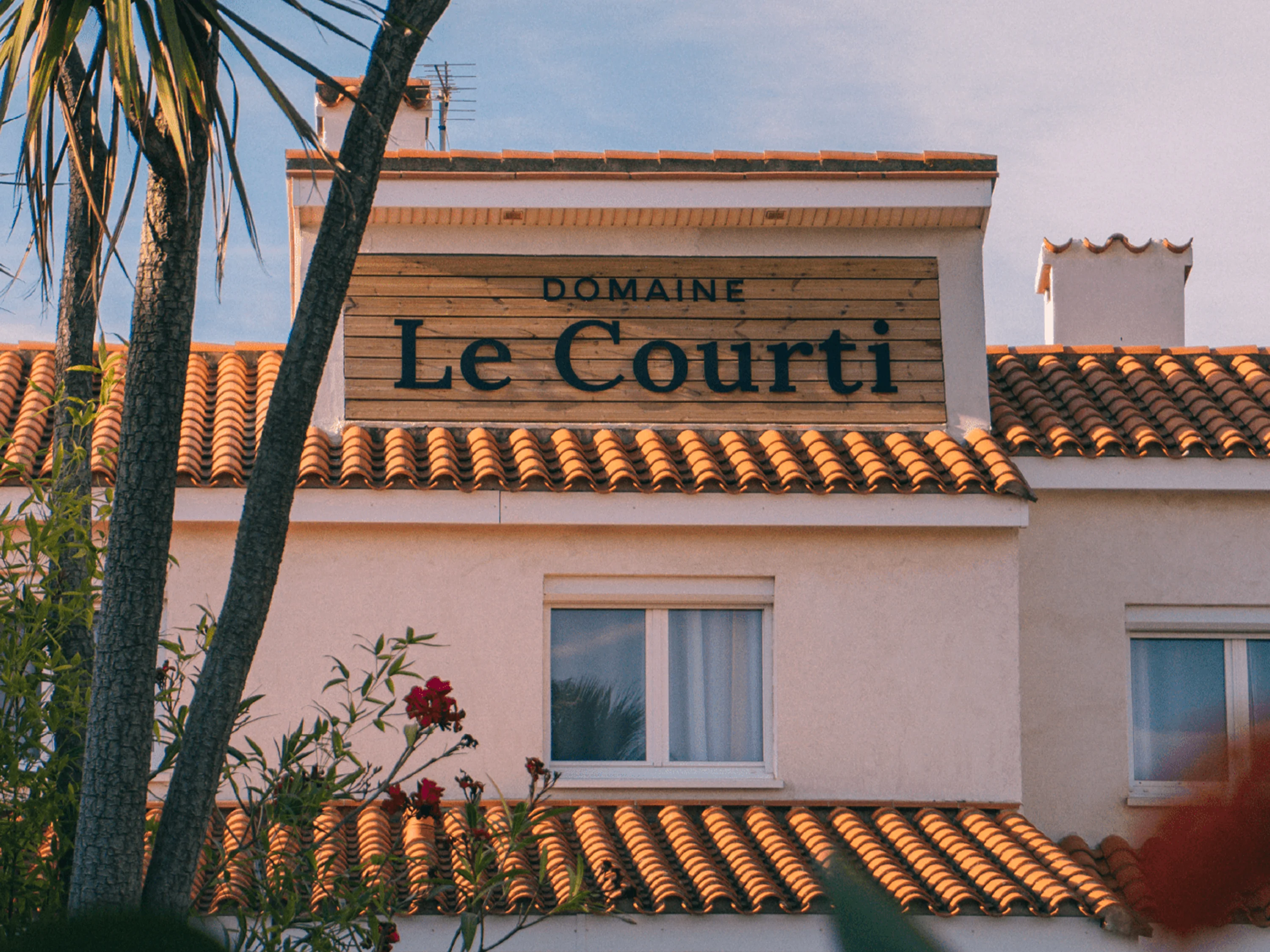
- Brand coherence. The imperfection must serve the brand's positioning, not the designer's mood board. When we built the identity for Le Courti, a seaside guest house with a 9.6/10 on Booking and 277+ reviews, the luxury had to emerge from the human warmth behind it, not be imposed with corporate gloss. From the hand-drawn crest to the in-room menus, every element was intentionally warm, tactile, personal, never "brand-guideline perfect." That's what authentic imperfection looks like when it serves a positioning.
This is why the trend actually favours experienced studios over AI-first workflows. The imperfection has to be curated, not random. Controlled, not accidental.
The counter-argument: when does imperfection become a cliché?
I want to be honest about something: this trend has a shelf life. We've seen this cycle before. In 2013-2014, flat design was the rebellion against skeuomorphism. Within two years, every app looked the same shade of flat. By 2016, Material Design was the rebellion against flat design's sterility. The pendulum always swings, and then it overcorrects.
The same risk applies here. When every studio starts adding grain and wonky serifs to look "authentic," the grain and wonky serifs stop being authentic. They become a new kind of corporate uniform, just in a different costume. I'm already seeing it: brands that have no reason to look raw or tactile are slapping hand-drawn textures on everything because it's trendy. A fintech app with scrapbook aesthetics doesn't read as authentic. It reads as confused.
The way to use this trend intelligently is the same as any other: start with strategy, not style. If your brand's positioning genuinely connects to warmth, craft, human presence, or physicality, then tactile imperfection will amplify your message. If your positioning is about precision, technology, or institutional trust, forcing imperfection will undermine it. This connects to something we explored in our piece on AI as a creative partner: the tool should serve the strategy, never the reverse.
The brands that will look dated in 18 months are the ones adopting the aesthetic without the thinking. The brands that will still look fresh are the ones whose imperfection is rooted in who they actually are.
What should you do with this right now?
If you're planning a brand identity, a website, or a packaging system in 2026, here's where the trend translates into practical decisions:
- Photography: Stop defaulting to AI-generated stock. Mix real photography with intentional post-production. Add grain. Use imperfect crops. Show the humans.
- Typography: Audit your typeface choices. If you're still on Inter or the Geometric Sans of the Month, consider whether an expressive serif or a characterful display face better serves your voice.
- Layouts: Give yourself permission to break the grid, but do it on purpose. Overlap, asymmetry, and collision work when they serve hierarchy, not when they mimic chaos.
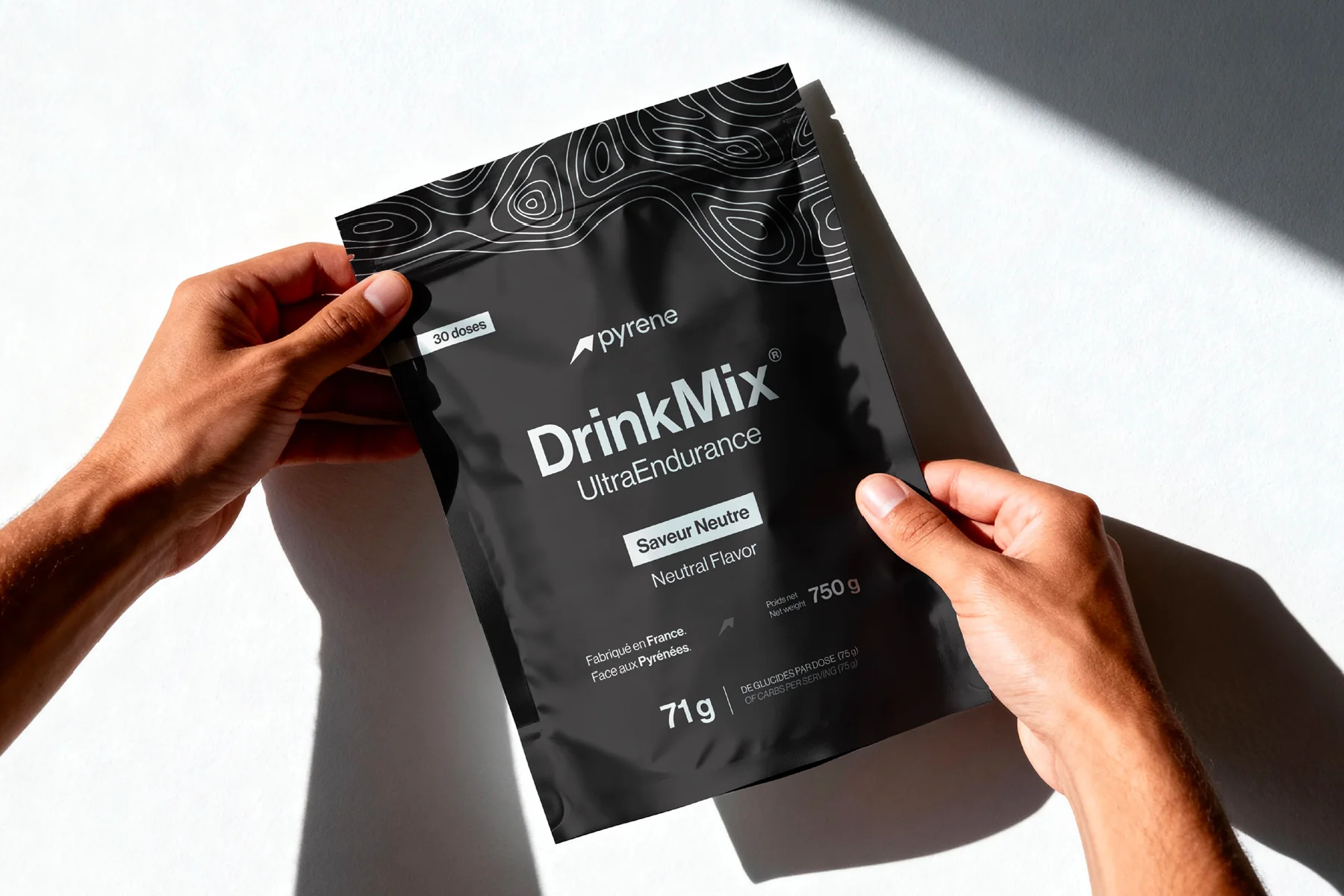
- Packaging: If you're in physical retail, this is your biggest opportunity. Emboss, deboss, textured stock, letterpress, these signal premium in ways that gloss never will. The fingers know what the eyes suspect.
- Digital: Micro-animations that feel hand-drawn. Page transitions that breathe. Loading states with character. The interface should feel like a place, not a spreadsheet.
And here's the connection to the broader identity conversation: an adaptive brand system can accommodate imperfect, tactile elements across every touchpoint while maintaining recognition. Imperfection doesn't mean inconsistency, it means controlled variation within a coherent system. The system gives you the structure; the imperfection gives you the soul.
One more thought. The reason this trend resonates isn't just aesthetic, it's economic. We've entered an era where the cost of producing polished visual content has collapsed to near zero. Any brand can look professional overnight. Which means "professional" no longer differentiates. What differentiates is specificity: the grain that only this photographer captures, the hand-lettering that only this designer makes, the texture that only this paper stock creates. These things take time, taste, and a human hand. They cannot be mass-produced. That's their value.
The brands that get this right in 2026 won't be the smoothest. They'll be the ones with the most character, the ones that feel like a specific human made them, with intention, taste, and an opinion about how the world should look. That opinion has to be written down somewhere to survive contact with a team, which is the unglamorous half of building a brand identity.
Imperfection isn't the absence of skill. It's the proof of it.
Sources
- Canva — 'Imperfect by Design': The Visual Design Trends Set to Define 2026 (December 2025)
- BusinessWire — Canva Unveils 2026 Design Trends (December 2025)
- Creative Bloq — Texture, Warmth and Tactile Rebellion (January 2026)
- Creative Bloq — Canva's 2026 Trend Predictions Have Filled Me with Hope (December 2025)
- Fontfabric — Top 10 Design & Typography Trends for 2026 (January 2026)
- It's Nice That — Graphic Trends to Bookmark for 2026 (January 2026)
- Kittl — Why Naive Design Leads the Anti-Perfection Trend of 2026 (2026)